20 November 2026
Know the plant: the story of Kanna
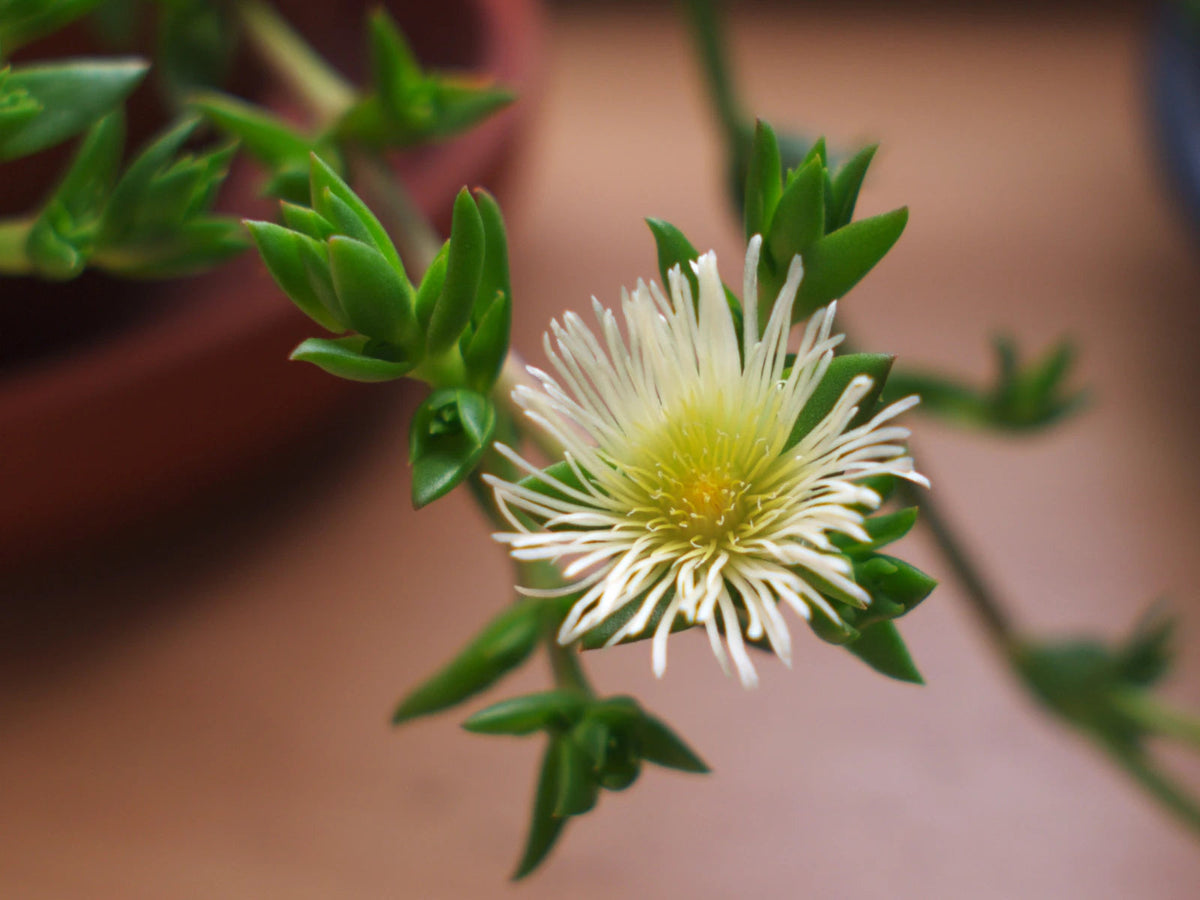
Kanna · Sceletium tortuosum
Every plant carries a story. Kanna's begins in the dry, open country of South Africa's western regions, and runs through thousands of years of human knowledge, passed from one generation to the next.
Where it comes from
Kanna is a low-growing succulent native to the dry western regions of South Africa. It spreads close to the ground, with fleshy leaves that store water through long dry seasons, and small, pale flowers.
As its leaves dry, they take on a delicate, skeleton-like form. This gives the plant its botanical name, Sceletium.

The first peoples of Southern Africa
The San and the Khoikhoi are the first peoples of Southern Africa. The San have traditionally lived as hunter-gatherers and the Khoikhoi as herders, and both hold a deep knowledge of the land, its plants, animals and seasons, passed from one generation to the next. Their communities live on today across South Africa, Namibia and Botswana.
They are often grouped under the name “Khoisan”, a term created by outsiders. Many communities prefer their own names, among them the ‡Khomani, the Nama and the Griqua.
Theirs is one of the oldest continuous human lineages on Earth. Their click languages are among the most distinctive in the world, and a phrase in the /Xam language, !ke e: /xarra //ke, “diverse people unite”, is South Africa’s national motto. Across the region, thousands of rock paintings and engravings by San ancestors record animals, people and ceremony.

Colonisation took much of their land and many of their languages. Today, communities continue to reclaim their land, revive their languages and speak for themselves.
Kanna is part of their knowledge, and the San are recognised as its original knowledge holders. The South African San Council has long held that they should share in any benefit from its commercial use, a principle recognised in South Africa’s first bioprospecting licence, in 2010.
We tell this story with gratitude, knowing it isn’t ours. It belongs to the San and Khoikhoi peoples.
A living tradition
Kanna is held in deep regard by the San and Khoikhoi peoples, as it has been for generations, and very likely for thousands of years. Knowledge of where to find it, when to gather it and how to prepare it was passed down by word of mouth, from elders to the young.
The plant was carried on long journeys across dry country and shared in social and spiritual life. It was valued enough to be traded.
How it was traditionally prepared
Traditionally, the plant was harvested, crushed and left to ferment, then dried. The Afrikaans name kougoed means "something to chew", which describes the most common way it was taken: a small piece of the dried plant was chewed and the saliva swallowed.
Over time, Kanna was also prepared as a tea or a tincture, or taken as snuff.
Into the written record
The first written account of Kanna dates to 1662, when the Dutch at the Cape traded with local peoples for the plant. In 1685, Simon van der Stel's expedition through Namaqualand recorded it in a painting, one of the earliest European images of the plant.
These records came late in Kanna's story. By the time they were written, the plant had been part of Khoisan life for countless generations.
Kanna today
Today, Kanna's distinctive alkaloid profile, including mesembrine and mesembrenone, is drawing renewed interest from researchers and from people seeking a more conscious relationship with the natural world.
Different extraction methods produce different concentrations and proportions of these compounds. Soma's first extract, RISE, is built around a standardised, mesembrine-dominant profile, so that every bottle is consistent.
Our respect for its origins
Soma was created to honour traditional knowledge, embrace modern science, and introduce a remarkable plant to a wider audience with respect for where it comes from. We see ourselves as guests in a very old story, and we intend to tell it with care.
Important information
RISE contains pharmacologically active Kanna alkaloids and is not yet available for sale. It is not suitable during pregnancy or breastfeeding. Do not combine it with SSRIs, SNRIs or other serotonergic medications. Consult your healthcare practitioner before use. 18+ only.
Follow Soma's journey to launch →
Sources
- The San, the first people in South Africa, South African History Online
- Who are the Khoisan people?, WorldAtlas
- San peoples create earliest African art, EBSCO Research Starters
- 10 000 San to benefit from bio-prospecting licence, SAnews (South African Government News Agency), 2010
- Social responsibility toward Khoi-San people of South Africa and the traditional uses of Sceletium tortuosum, WholeFoods Magazine
Cover photo: Kanna flower by Tommi Nummelin, CC BY-SA 3.0. Rock painting photo: Lukas Kaffer, CC BY-SA, via Wikimedia Commons. The landscape image is an illustration.